
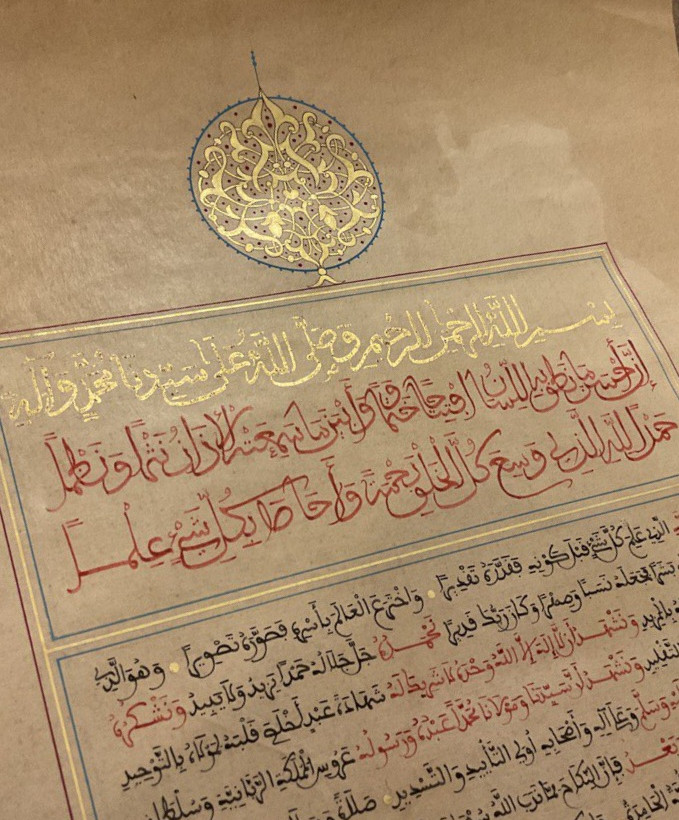
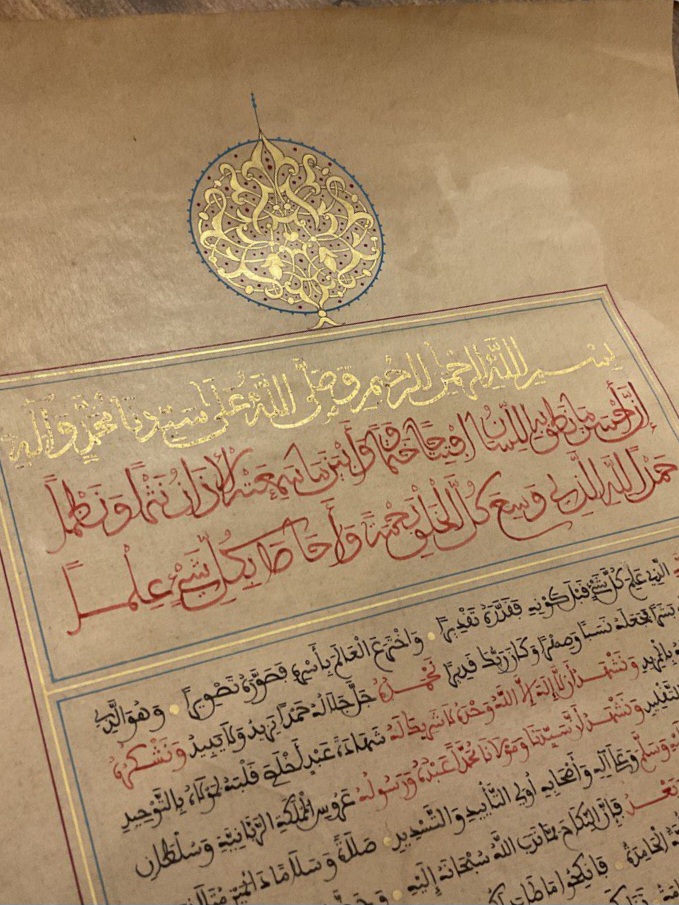
Maghribi Thuluth Script
GENERAL INFORMATION
This course introduces students to the artistic and technical secrets of Maghribi Thuluth calligraphy, a distinctive style derived from the classical Thuluth script and adapted within the Maghribi tradition.
GENERAL INFO:
Course Category: Islamic Calligraphy
Course Format: Online
Course Schedule:
Sep 5 – Dec 20, 2026
Winter break
Jan 10 – Feb 1, 2027
Ramadan/Eid break
March 21 – May 10, 2027
Time: Sunday, 4 p.m. UTC
Instructors: Badr Essaihi
Course Price:
- Early bird: $579 (Until July 31)
- Regular: $639
Due to limited seating, we request that you cancel by July 15, 2026, to receive a full refund. To apply for financial aid, fill out this form by May 15, 2026. Applications after this date will be reviewed for the next year’s programs.
ABOUT THE COURSE
This course introduces students to the artistic and technical secrets of Maghribi Thuluth calligraphy, a distinctive style derived from the classical Thuluth script and adapted within the Maghribi tradition.
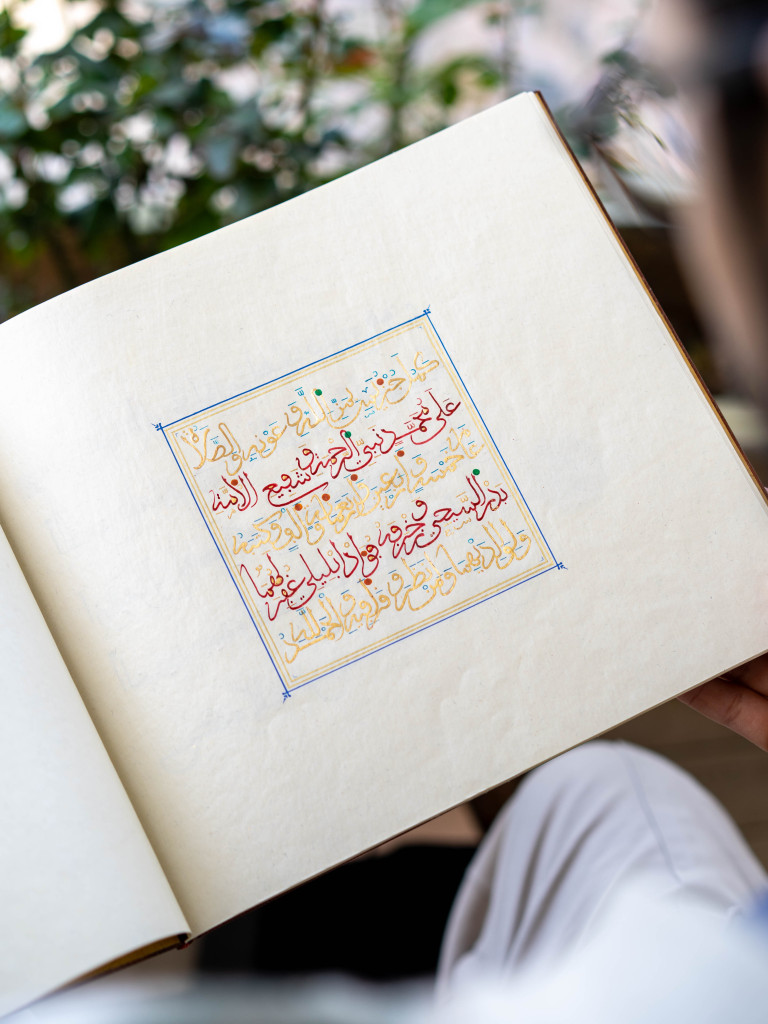
Participants will progress step by step, beginning with mastering the writing of the *Basmala*, followed by individual letter forms, then advancing to letter combinations, words, and finally the full line composition system in Maghribi Thuluth.
A key component of the course is a final project: each student will produce a complete calligraphic composition of Surat Al-Fatiha, applying the skills acquired throughout the program.
Maghribi Thuluth is known for its rich visual vocabulary, fluidity, and artistic flexibility. Unlike classical Thuluth, which follows strict and fixed rules, Maghribi Thuluth allows greater freedom in the shaping and scaling of letters, adapting to the visual balance required by each composition. This makes it especially suitable for creative and expressive artistic work.
Historically, this script—once referred to as Mashriqi or Mashriqi Mutamaghrib—was later distinguished as Maghribi Thuluth. It evolved as a variant within the broader system of Arabic calligraphy, drawing from a set of 39 character forms.
Maghribi Thuluth has been widely used across different contexts:
* In *architecture*, particularly in Moroccan and Andalusian styles, for Quranic inscriptions and poetry.
* In *manuscripts*, for writing book titles, chapter headings, and names of Quranic surahs.
* As a decorative and functional script in *coinage*, especially from the Almohad period onward, later spreading across Western Islamic regions.
* In *artistic and decorative design*, often alongside Kufic script, particularly during the Marinid period in Moroccan architecture.
This course offers both a historical understanding and a hands-on artistic experience, enabling students to explore the expressive potential of Maghribi Thuluth and produce refined, aesthetically rich calligraphic works.
ABOUT OUR INSTRUCTOR
Badr Essaihi
Ustaadh Badr Essaihi, from Morocco, graduated from the prestigious Academy of Traditional Arts in Casablanca and has received his Master’s degree in Calligraphy from the department of Traditional Turkish Arts at Fatih Sultan Mehmet University, Istanbul in 2024. Ustaadh Badr has also completed the six Ottoman scripts with Master teachers Haytham Salmo and Davut Bektaş.
Along with researching the history and styles of Maghribî and Andalusî scripts, Ustaadh Badr participates in several national and international calligraphy exhibitions and conferences.
